| Real-time adaptive calibration Beginner-to-expert guidance is visible to the user as the session changes. | The Status Line shows live calibration so the buyer can see how the system is adapting. | Most prompt products stay static or make the user guess how the session is being handled. |
| Diamond Invariant A structural frame is maintained across the full response experience. | 17 anchor points keep output structure consistent across turns, even as the topic changes. | Most prompt products drift as the conversation changes or the user adds new context. |
| Dynamic capability self-query The system checks what tools and capabilities are available before it acts. | Boot-time detection lets CLEAR AI adjust to the available model, tools, and environment. | Many products assume a fixed tool setup and become less useful outside that environment. |
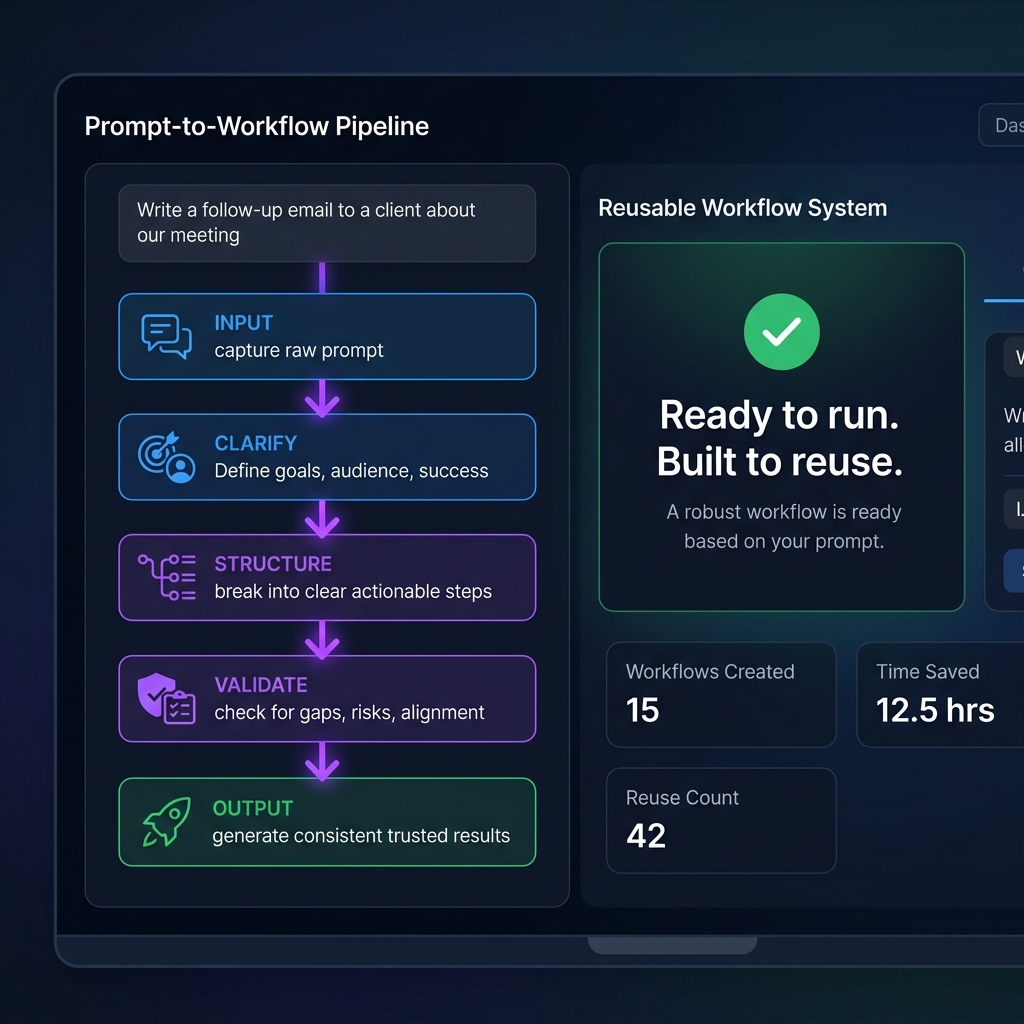
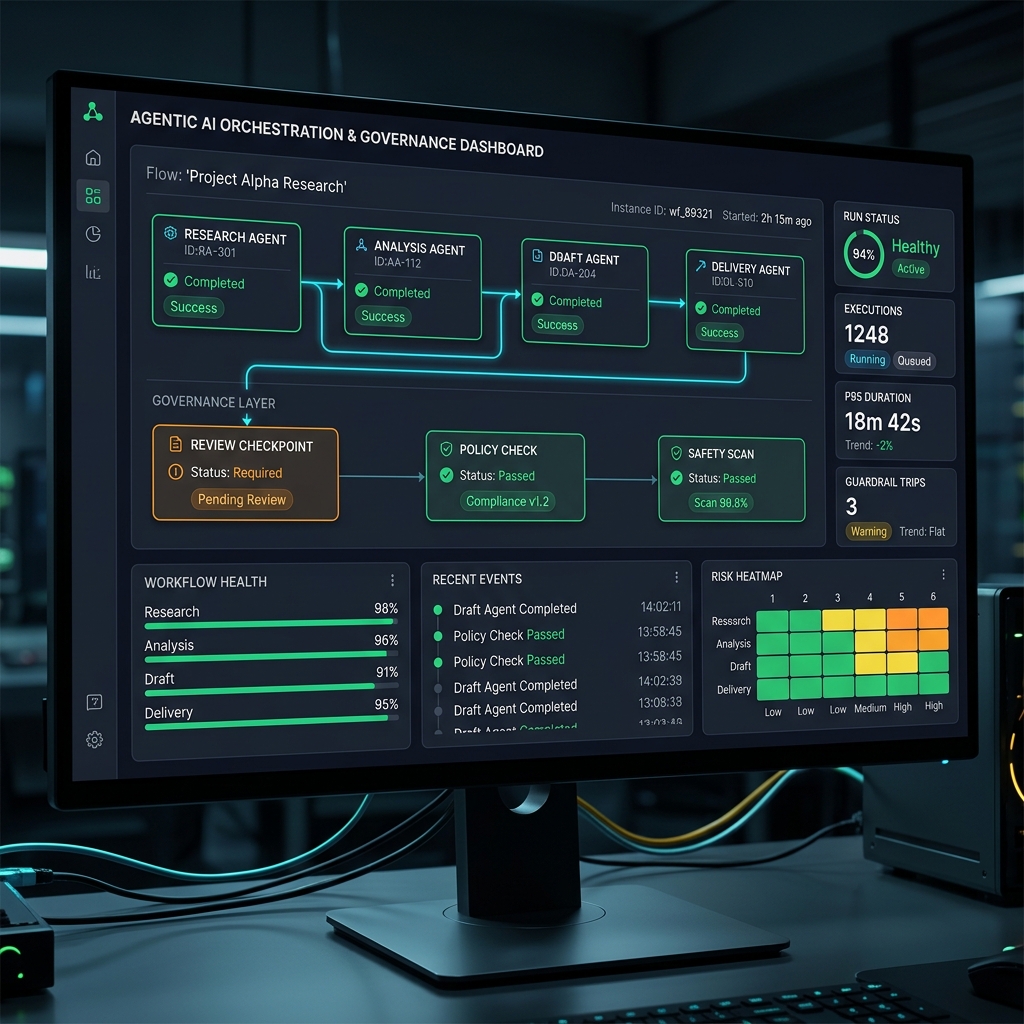
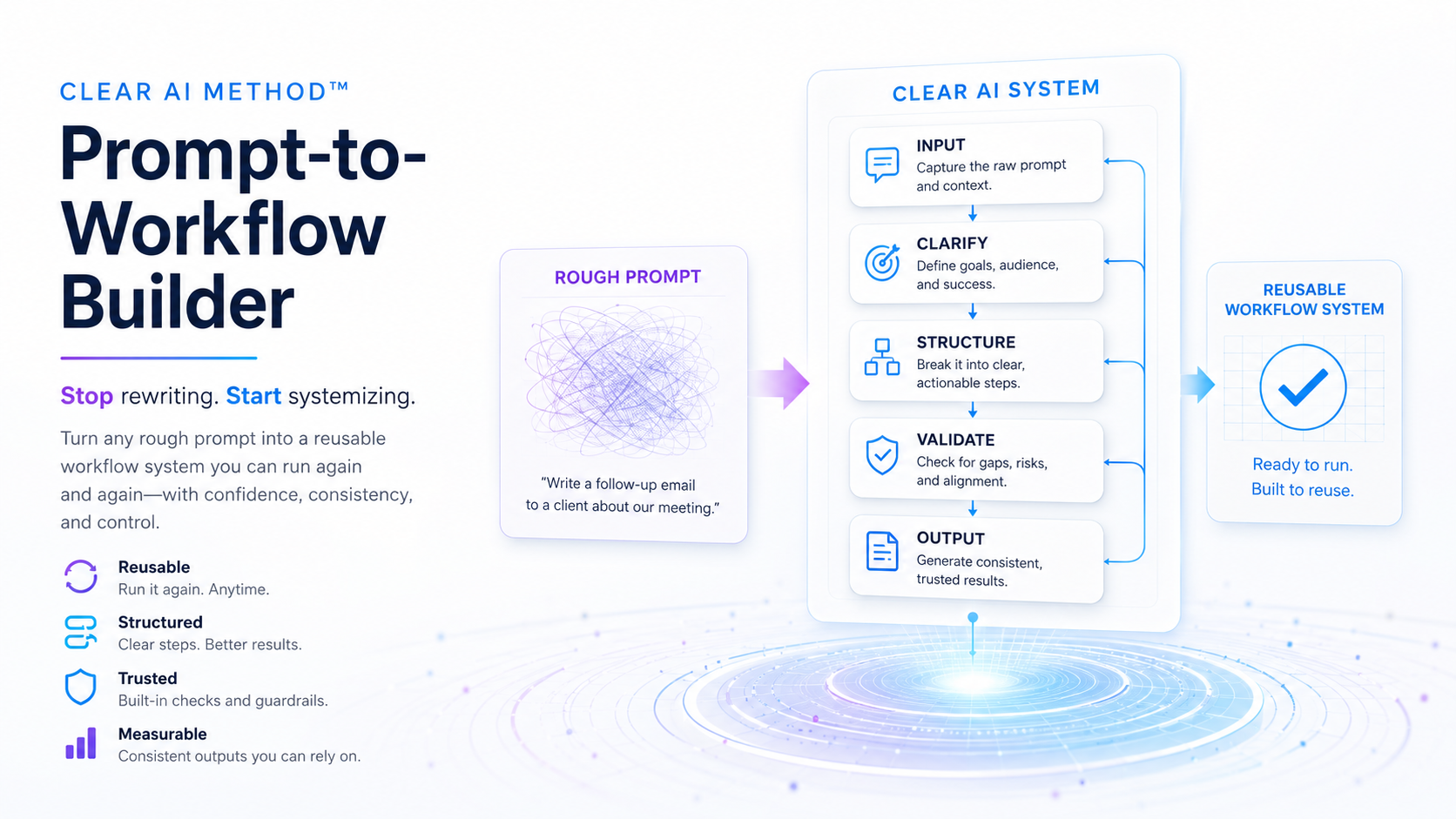
| Five-phase structured analysis with gates The method moves through a repeatable CLEAR loop instead of a loose prompt chain. | Review gates, assumption checks, and refinement points are built into the process. | Some products use multi-step prompting but do not expose gates or assumption tracking. |
| Cross-platform design The method is not locked to one AI vendor or one model family. | CLEAR AI is designed for GPT, Claude, Gemini, Copilot, and local or internal AI models. | Many prompt products are written around one model and lose value when moved elsewhere. |
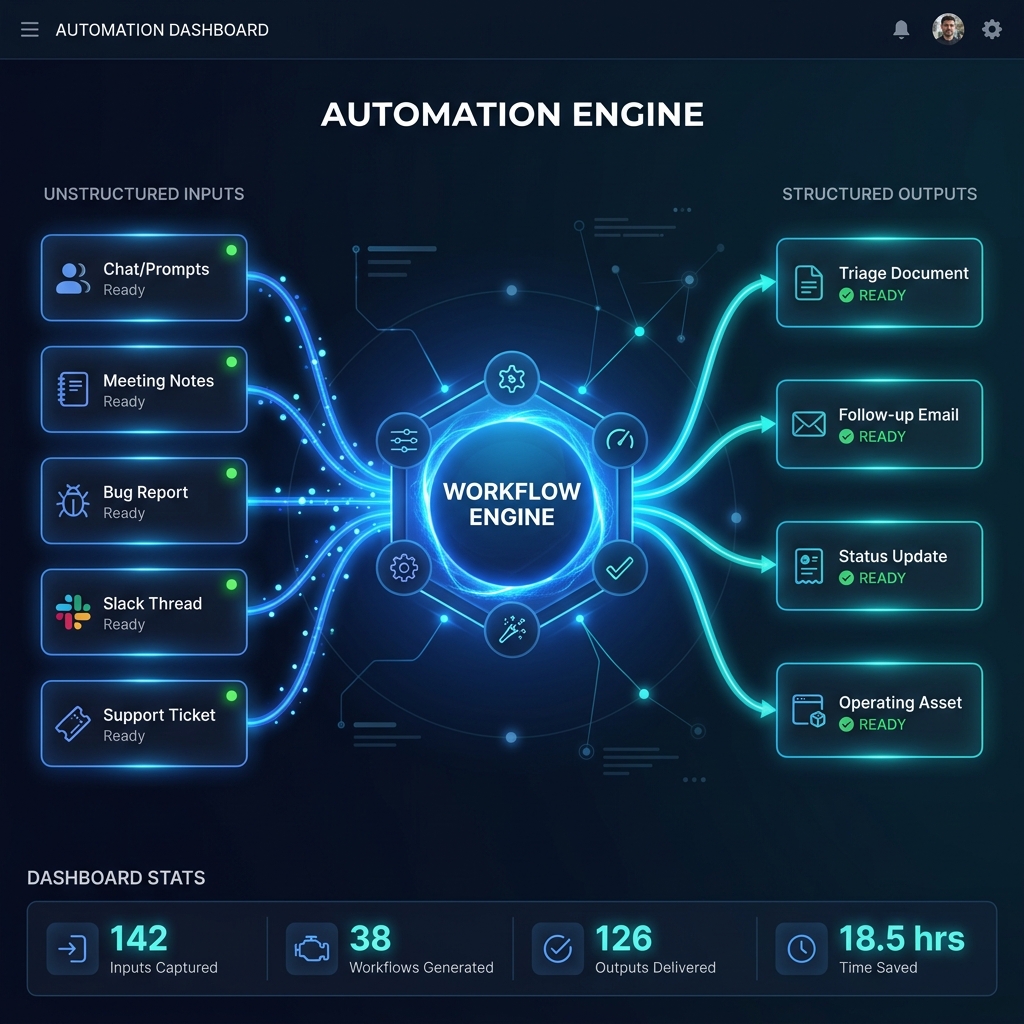
| Simulate mode The product can demonstrate its own workflow before a buyer commits to a use case. | Built-in simulation creates an end-to-end demo path for sales, onboarding, and education. | Most products require the buyer to imagine the workflow or test it manually from scratch. |
| Thirteen-command vocabulary Users get practical commands for steering, comparing, visualizing, and debugging. | A three-tier footer teaches reusable commands like break it, visualize, compare, and help. | Most prompt products do not teach buyers how to control the system after the first answer. |
| Perspective-visible thinking The user can see which expert lens is being applied to the work. | CLEAR AI names the active perspective and can blend domain lenses as the session evolves. | Role prompts often stay fixed, even when the business problem needs a different lens. |
| Failure-Outward Analysis The method starts by finding where the work can fail before promising success. | Three failure surfaces are reviewed before the system moves toward the recommended output. | Most prompt products optimize for quick output before risk, constraints, and failure points. |
| Session receipt The buyer leaves with a shareable summary of what was mapped and decided. | Module 12 produces a reusable receipt that documents the session, decisions, and next steps. | Most prompt products end at an answer and do not create a durable implementation artifact. |

 Featured