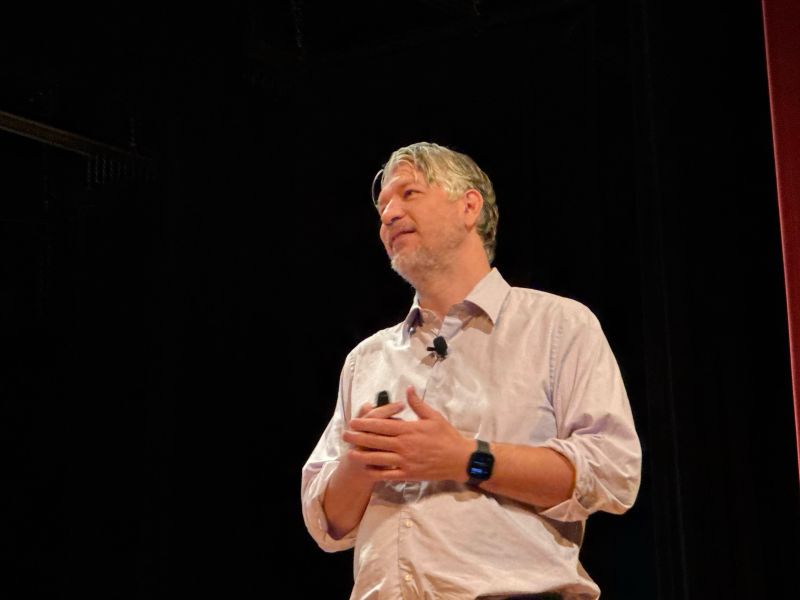
Preston McCauley · AI Implementation Consultant · Dallas, TX

AI that your people actually use.

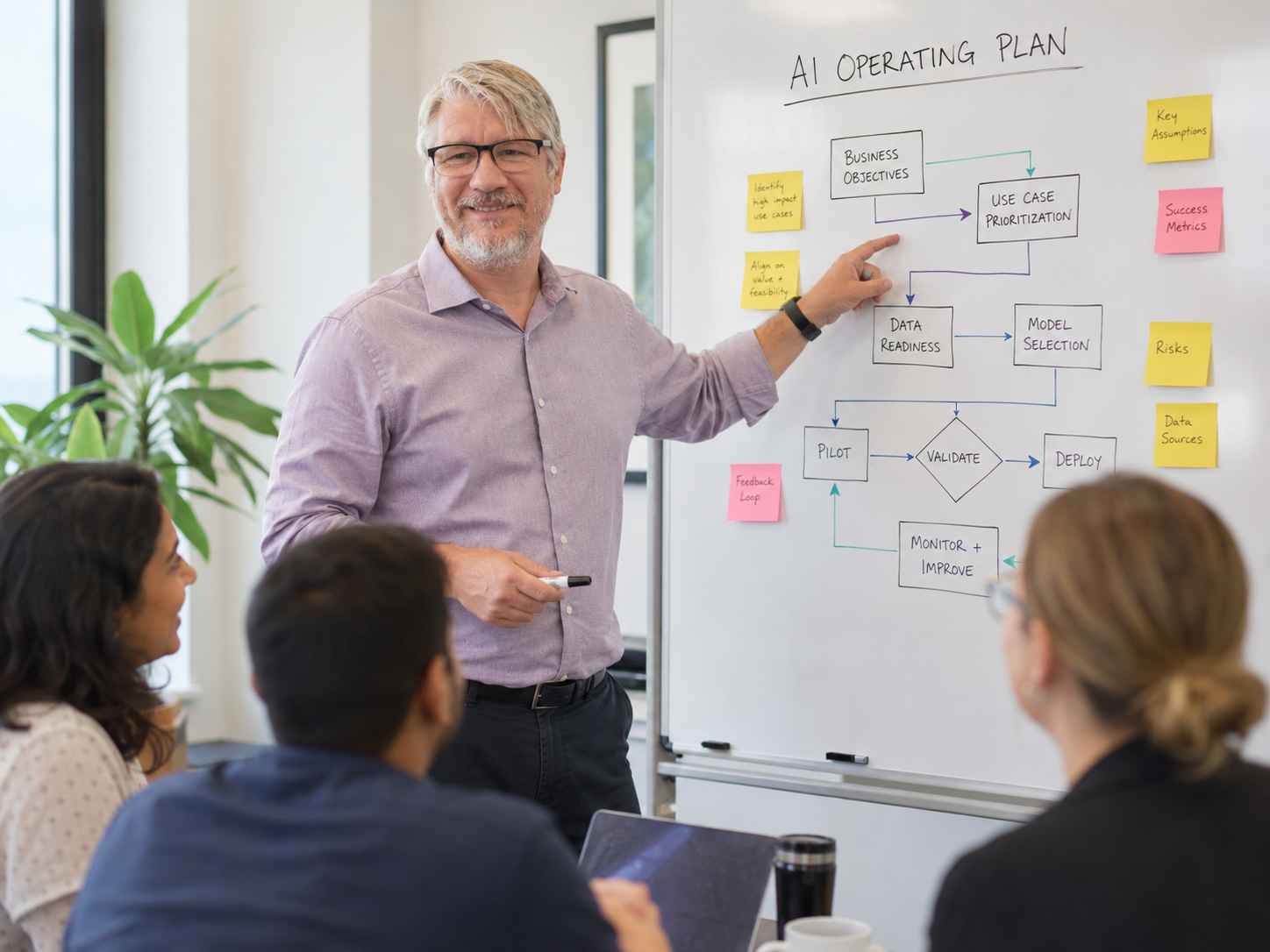
I'm Preston McCauley. For 25 years I've built AI, UX, and workflow systems — and written the book on putting them to work. Through Clear Sight Designs, my Dallas consultancy, I help businesses close the gap between trying AI and running on it.

93% of small and mid-sized businesses using AI say it helps. Only 14% have made it part of how the business actually runs. That gap isn't a technology problem — it's a workflow, trust, and people problem. That's the problem I solve.

See How I Work

Author, Generative AI for Everyone · Top 75 AI Innovator nominee · Builder of governance, agentic, and biomedical AI systems

This site is powered by Clear Intelligence: an adaptive intelligence layer that brings section-specific context forward when invited, not a chatbot.

Real AI Problems Facing Dallas Businesses:

Founders drowning in the manual work that runs the businessLeaders unsure where AI actually belongsTeams mapping agentic workflows before automationProduct and operations teams turning pilots into real systems
Healthcare, biotech, risk, and education teams with complex workflows

Why Work With Me

Systems designer for 25+ years. Author of Generative AI for Everyone.

You're not hiring an agency bench or an IT shop. You're working with me — and I've spent decades where AI, UX, product architecture, and real human workflows collide: immersive systems, healthcare-adjacent work, complex software. Agentic AI lives at exactly that intersection. So do I.

Here's what I know that most AI vendors in this market don't: for most businesses, the personal relationship is the product. The fear isn't unfounded — automate the wrong thing and you sterilize what made customers choose you. The answer isn't avoiding AI. It's placing it where it absorbs the friction and the busywork, so your people have more room for the human part, not less.

AI UX Product Architecture Workflow Design Systems Thinking
Experience

25+ years

AI implementation across product, UX, and systems architecture. Where prototypes meet real workflows: user trust, data handoffs, human review gates, business rules, adoption.

Published

Generative AI for Everyone

Clear enough for nontechnical leaders, deep enough to connect model behavior to product choices, operations, and implementation risk.

Recognized

Top 75 nominee

A nomination for practical delivery: governance tooling, workflow automation, and decision-support systems built to move beyond prototypes.

Builds

Systems, not prompt packs

Governance engines, biomedical data tools, agentic workflow systems, adaptive orchestration.

Real AI Use Cases

Systems proof, not abstract AI commentary.

These are the kinds of systems I have already built, mapped, or translated into something people can use: education, orchestration, governance, biomedical reasoning, and workflow implementation.

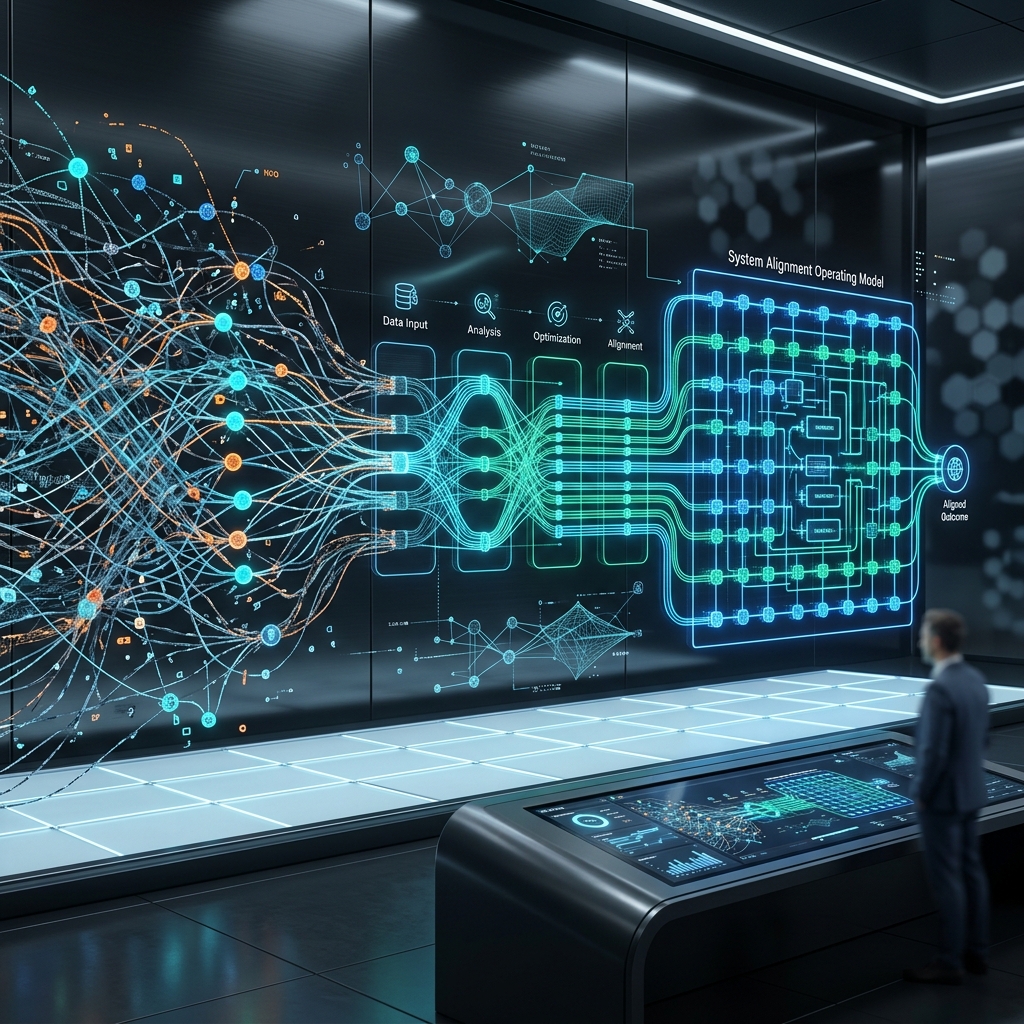
AI systems architecture visualization
AI Expert + Agentic AI Orchestration + Cognitive Artificial Intelligence Creator

Not just using today's tools. Building the systems those tools are turning into.

Clear Sight Designs is built on real systems work, not abstract AI commentary. I have designed and translated complex AI-enabled systems across education, orchestration, governance, biomedical reasoning, severe weather intelligence, and workflow implementation. That work includes reusable prompt-to-workflow systems, client follow-up and triage automation, agentic governance models, failure-surface frameworks, education resilience foresight tools, deterministic biomedical reasoning engines, and multi-hazard intelligence architectures capable of turning noisy data into actionable operational insight. Across these projects, the focus is always the same: take complexity that normally stays trapped in research, strategy decks, or technical teams — and turn it into systems people can actually use, test, trust, and improve.

Author Clear Intelligence Governance engines Agentic workflows Biomedical AI Weather intelligence Workflow automation
AI is the technology The expertise is knowing when to use it, when to simplify instead, and how people will actually trust the result.
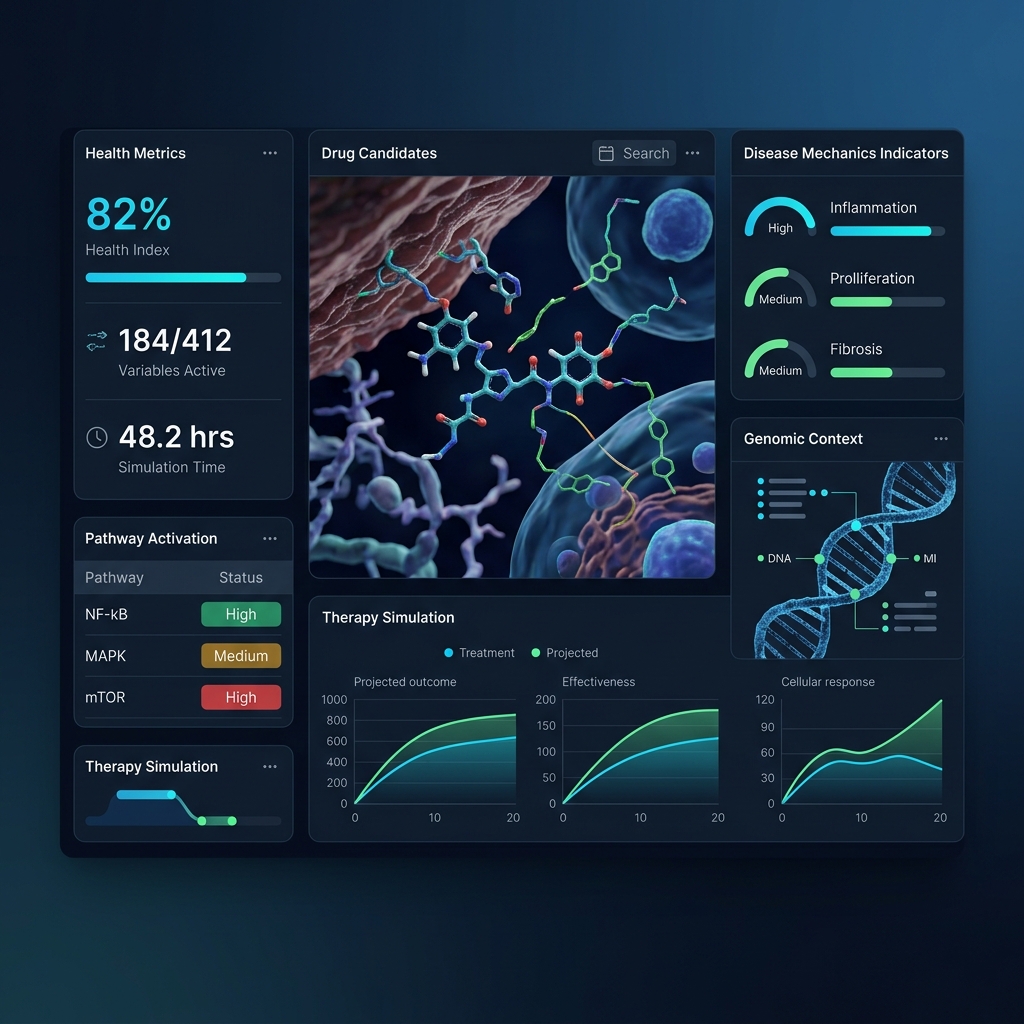
PHYSIM biomedical AI dashboard
Complex Systems Proof

If I can map drug behavior, disease mechanics, and patient-stage complexity, I can help map the complexity inside your business.

PHYSIM is the kind of work that forces real systems discipline: many variables, high-risk decisions, hidden dependencies, and no room for vague AI magic. That same systems lens is what I bring to businesses trying to turn AI from experiments into working operations.

Biomedical AI Genomic context Decision gates Workflow translation
See the biopharma system example
Tornado Onset intelligence dashboard
Tornado Onset Intelligence

If I can turn storm complexity into early tornado intelligence, I can help teams act before the warning sirens.

Tornado Onset is a systems example built around multi-variable storm reasoning, early signal detection, and operational decision support. It turns shifting radar, environmental inputs, and evolving storm behavior into usable forecast intelligence for media, enterprise, and field operations.

Early signal detection Storm reasoning Decision windows Operational forecasting
Agentic orchestration and governance dashboard
Agentic Orchestration + Governance

If I can map context decay, authority creep, and failure surfaces in agentic workflows, I can help make your AI operations governable.

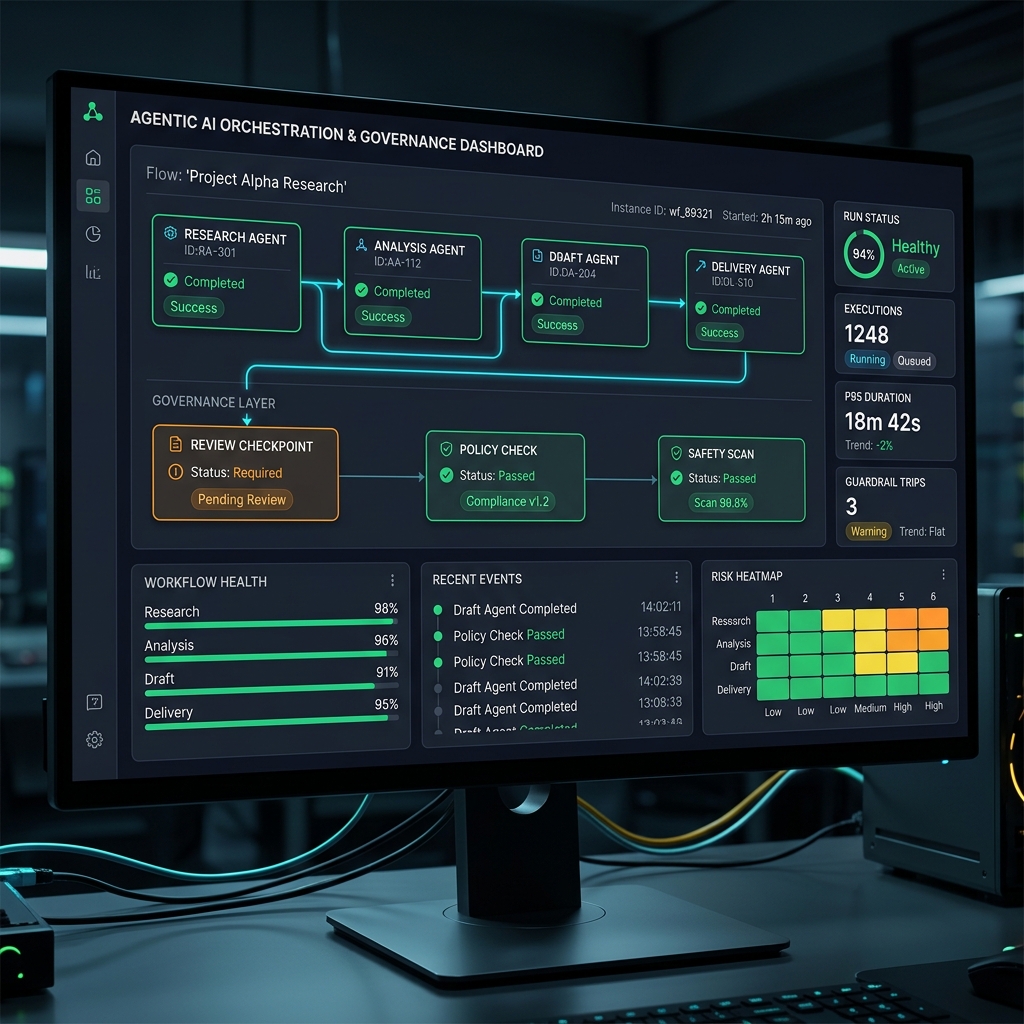
I build orchestration and governance systems that turn multi-step AI work into something observable, testable, and safer to deploy. That means structured handoffs, guardrails, review layers, and operational logic that keep automation useful without letting it drift.

Agentic workflows Governance Failure surfaces Operational guardrails
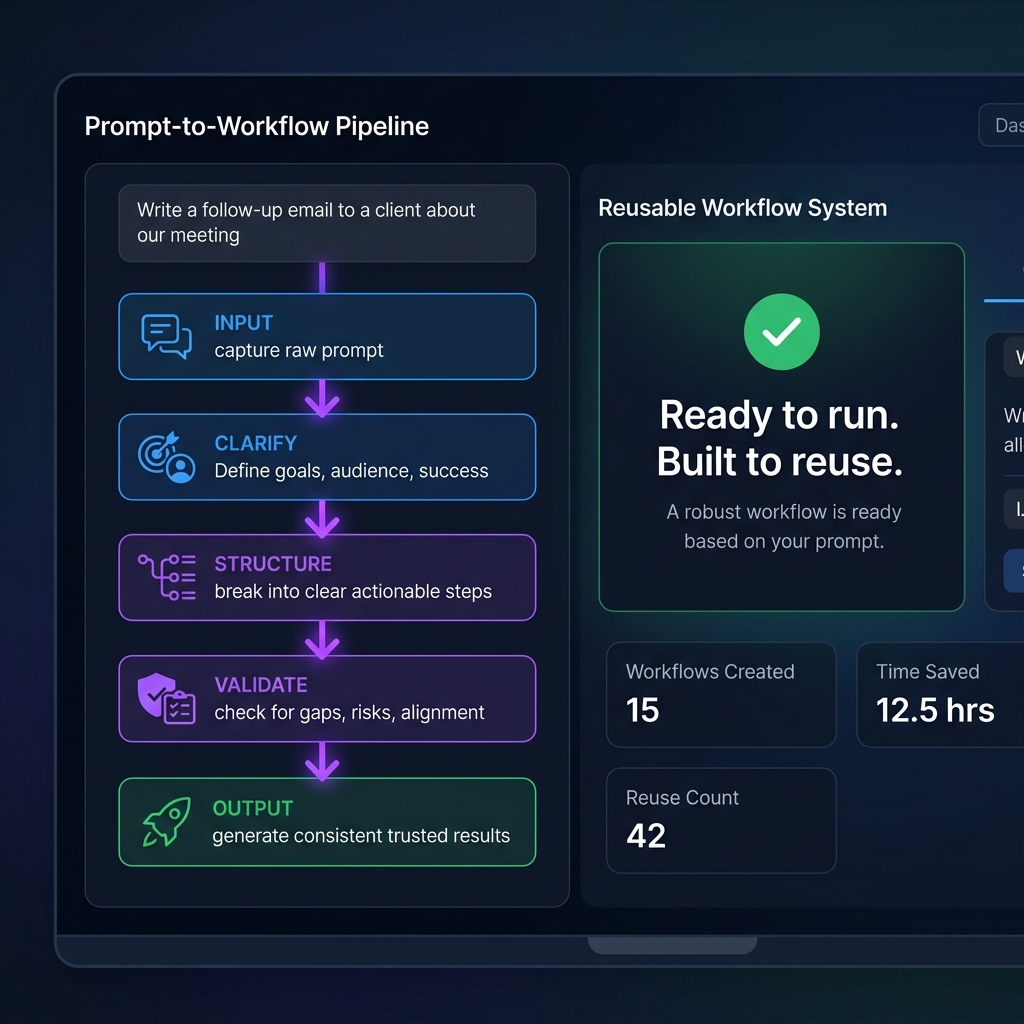
Workflow implementation systems dashboard
Workflow Implementation Systems

If I can turn messy prompts, notes, and bug reports into reusable workflows, I can help turn AI experiments into daily execution.

I have built workflow systems that translate unstructured inputs into repeatable outputs people can actually use — from follow-up emails and project updates to triage documents and operating assets. The goal is not more prompts. It is dependable, reusable workflow behavior.

Workflow systems Prompt-to-workflow Triage automation Operational outputs
Published Work & Tools

Practical AI thinking in forms people can actually use.

Books, kits, and field notes that turn AI concepts into working decisions.

Clear Answers

Ask me anything about AI implementation.

The questions every Dallas business owner is asking — answered. Have a different one? Ask it live.

Clear Intelligence Live

Ask one implementation question. The answer folds back into this page, shaped by the Clear Sight Method.

01 — Who is Preston McCauley?

An AI implementation consultant who builds the systems, not just the advice.

Author of Generative AI for Everyone, Top 75 AI Innovator nominee, 25+ years across AI, UX, and systems architecture. I run Clear Sight Designs in Dallas.

02 — Why do most AI pilots stall?

Because real work is messier than a demo.

The average small business now juggles multiple AI tools that don't talk to each other or to the systems the business already runs on. Workflows hide decisions, handoffs, and judgment. I map those before anything gets automated.

03 — Who do I work with?

Teams stuck between "we tried AI" and "we run on AI."

Dallas-Fort Worth founders drowning in manual work, leaders unsure where AI belongs, and healthcare, biotech, risk, and education teams with complex workflows. Remote clients too.

04 — How do engagements work?

I start with the system, not the tool.

Work, users, data, decisions, risks, and outcomes get mapped first. Then the engagement takes the shape that fits the problem.

The Real Problem

The gap isn't adopting AI. It's implementing it.

  • Deciding where AI belongs — and where it doesn't
  • Mapping the workflow before it's automated
  • Keeping what must stay human, human

Almost every business I meet in Dallas has tried AI — and most of them like it. Nationally, 93% of small and mid-sized businesses using AI report real benefits. But only 14% have integrated it into how the business actually operates. That's the implementation gap, and it's where money, time, and trust go to die.

The question is no longer "Should we use AI?" It's "Where does it belong, what stays human, and what has to change so the business can run on it?"

Not everything needs AI. Some things need better process, better UX, better data structure, or clearer decision logic. The value is knowing the difference before money, time, and trust get spent implementing the wrong thing.

"Don't start with the tool. Start with the system."
— The Clear Sight Method
Clear Intelligence Live

Ask this section one real workflow question. The answer folds back into the page, shaped by the Clear Sight Method.

AI Consulting Services

Consulting that starts with your system, not the tool.

Most AI initiatives fail because they start with off-the-shelf technology instead of the human workflow. Based in Addison, I provide AI implementation consulting across the Dallas-Fort Worth metroplex designed to fix exactly that. I step in before a single line of code is written to ensure I am solving the right problem for your business.

To tackle your hardest challenges, I use the most advanced AI systems in the world, including custom artificial intelligence I have developed myself. In fact, this very website is running on one of those systems—an adaptive intelligence layer that understands and learns how you are interacting with it right now. It's living proof of my expertise in action.

Too often in this industry, "Human-in-the-Loop" is treated as just a checkmark on a page. When working with clients, I help them think about how humans are the end experience. This reframing is not just about building AI-enabled systems; it's about building systems that amplify human potential.

To make that happen, I partner with you across a myriad of capabilities to bridge the gap between complex logic and human usability. I can help you build the complete story through:

Augmented AI Strategy & Implementation Modeling: Moving beyond prototypes to map out deterministic pathways that allow you to effectively Concept, Ideate, and Consolidate your AI initiatives into actual business operations.

Architecture Forecasting & Rescue: Evaluating your current tech stack and forecasting future infrastructural needs to ensure the systems I build with you today won't break under the weight of tomorrow's models.

Agentic Development & Orchestration: Structuring multi-agent workflows with strict governance loops, ensuring every automated process communicates flawlessly and has built-in supervision.

Complex Problem Solving: Applying systemic pattern thinking to your most intricate challenges—from operational bottlenecks to advanced computational logic and data structuring.

UX Design & Cognitive Prototyping: Utilizing Multi-Dimensional UX (mDUX) principles and clean aesthetics to strip away visual clutter. I design interfaces that translate advanced AI reasoning into frictionless, intuitive human experiences.

You get practical, strategic direction that turns AI into a reliable utility for your people, rather than an endless science experiment.

Flagship — Augmented AI Strategy & Implementation Modeling Most engaged
"AI becomes useful when the business system is visible before the tool is chosen."

Move beyond prototypes by mapping deterministic pathways that let you concept, ideate, and consolidate AI initiatives into the way the business actually operates.

ConceptIdeateConsolidateOperational pathwaysHuman end experience
The Decision

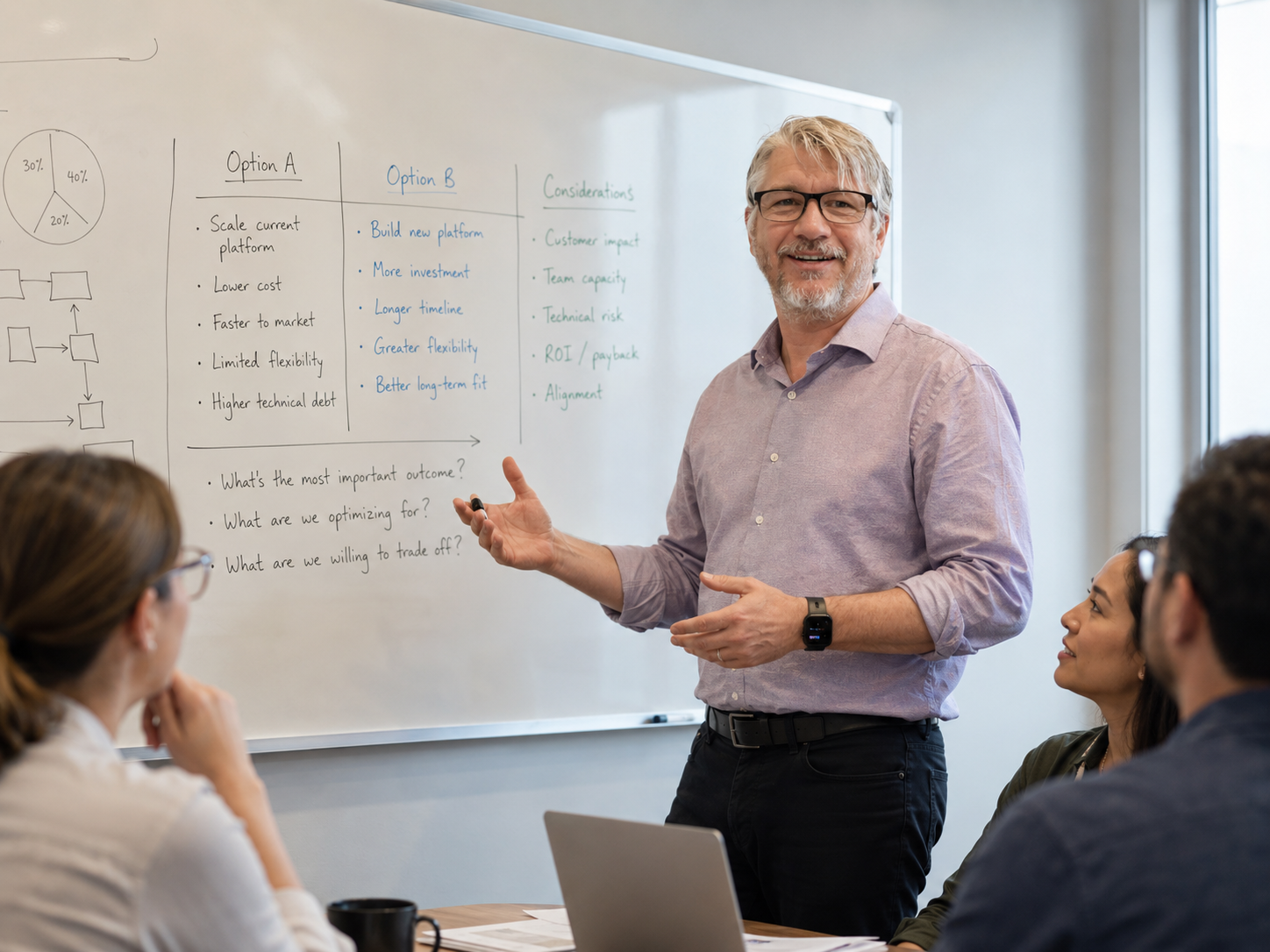
Which AI initiative belongs in operations, which problem it actually solves, and what pathway gets it there?

What You Get

An implementation model connecting workflow, human review, data, governance, UX, and the next practical build step.

Timeline

2–4 weeks to a decision-ready implementation model.

Agentic AI workflow workbench showing agents, lineage, and decision paths
Workflow architecture before automation.
AI reasoning architecture diagram showing competency, learning, and decision layers
Forecasting + Rescue

AI Architecture Rescue & Technical Diligence

You stitched five tools together and now need to know whether the system can hold.

I evaluate your current tech stack and forecast future infrastructure needs so what you build today does not break under the weight of tomorrow's models.

Decision: Is this AI system technically defensible, scalable, and worth the next investment?

What you get: A production-readiness assessment, infrastructure forecast, remediation plan, or risk-rated diligence memo.

Timeline: 2–4 weeks, by system complexity.

Structured data and systems architecture visualization
Agents + Governance

Agentic Development & Orchestration

Agentic workflows need supervision, communication, and governance before they need more autonomy.

I structure multi-agent workflows with strict governance loops so automated processes communicate cleanly, remain observable, and keep supervision built in.

Decision: What should the agents do, what should stay human, and where do supervision loops belong?

What you get: An agentic workflow blueprint with communication paths, review gates, escalation rules, and operational boundaries.

Timeline: 2–4 weeks to an actionable blueprint.

Method

Make the system visible first.

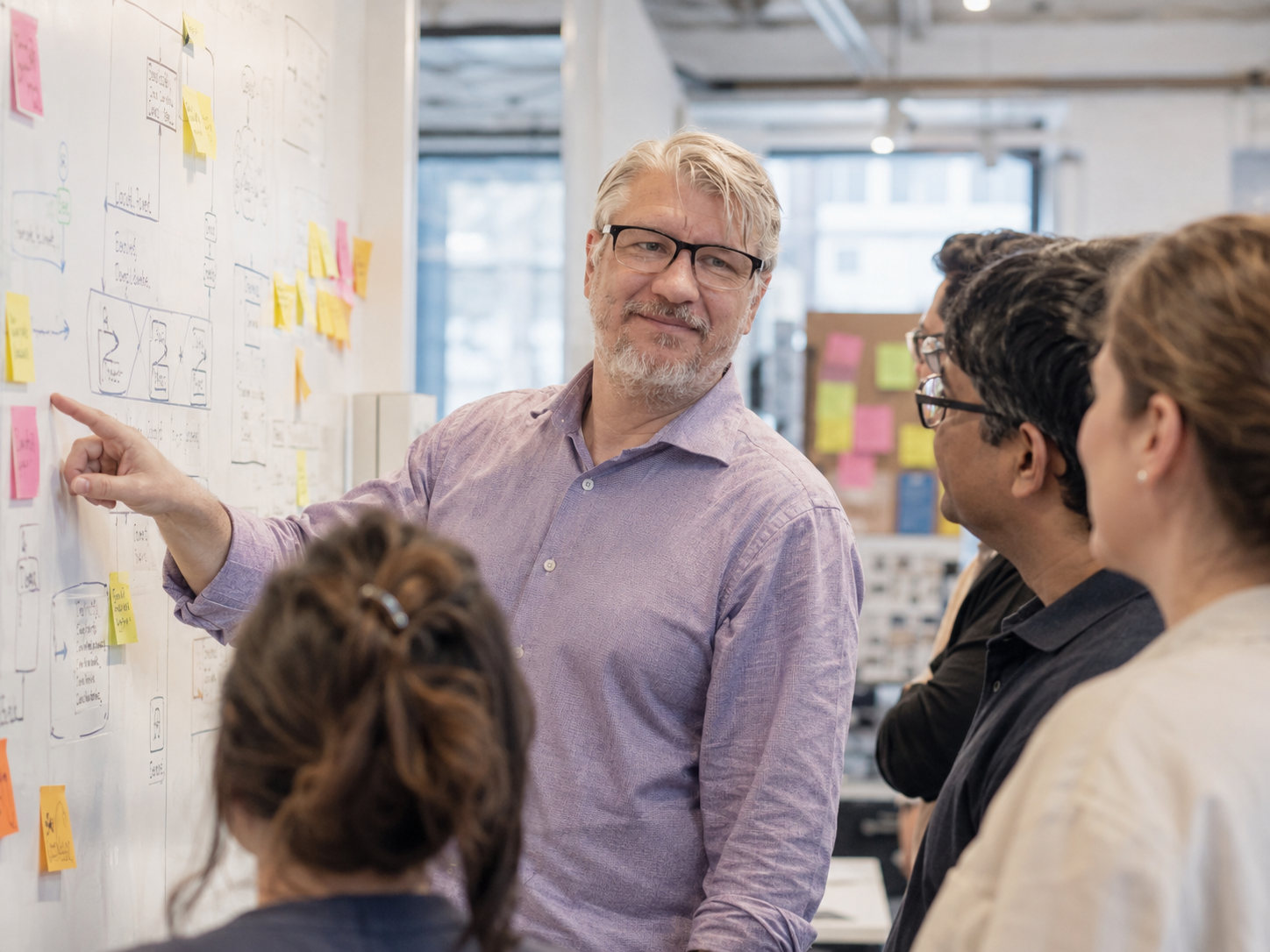
Your sales history lives in one tool, inventory in another, and ten years of client relationships are locked in someone's email box, scattered across notes, or just living in someone's memory. My method starts by making that fragmented reality visible—the people, workflow, data, interfaces, limits, risks, and adoption paths—because that is the exact ecosystem your AI has to survive in.

Clear Intelligence: Ask one implementation question. The answer folds back into this page, shaped by my methodology.

How should this workflow be mapped?

CIC™ Method — Based on My Upcoming 2nd Book

Innovation with AI at every step.

A proprietary innovation model designed for the power, sophistication, and reasoning that AI brings to future-forward planning.

Most innovation frameworks were designed before AI existed. They assume human-only reasoning, linear discovery, and months of manual validation. CIC™ — the Contextual Innovation Cycle — is built for what AI actually makes possible: rapid scenario modeling, failure-surface detection, multi-variable reasoning, and structured prototyping that produces strategic intelligence, not throwaway demos.

I teach leaders how to innovate with AI at every single step — from initial concept through validation, architecture, and deployment. The model is designed to harness AI's reasoning capabilities for decisions that used to take weeks of committee work.

The result: prototypes that become strategic product intelligence — not throwaway work.
CIC Contextual Innovation Cycle showing prototypes as product intelligence instead of throwaway work

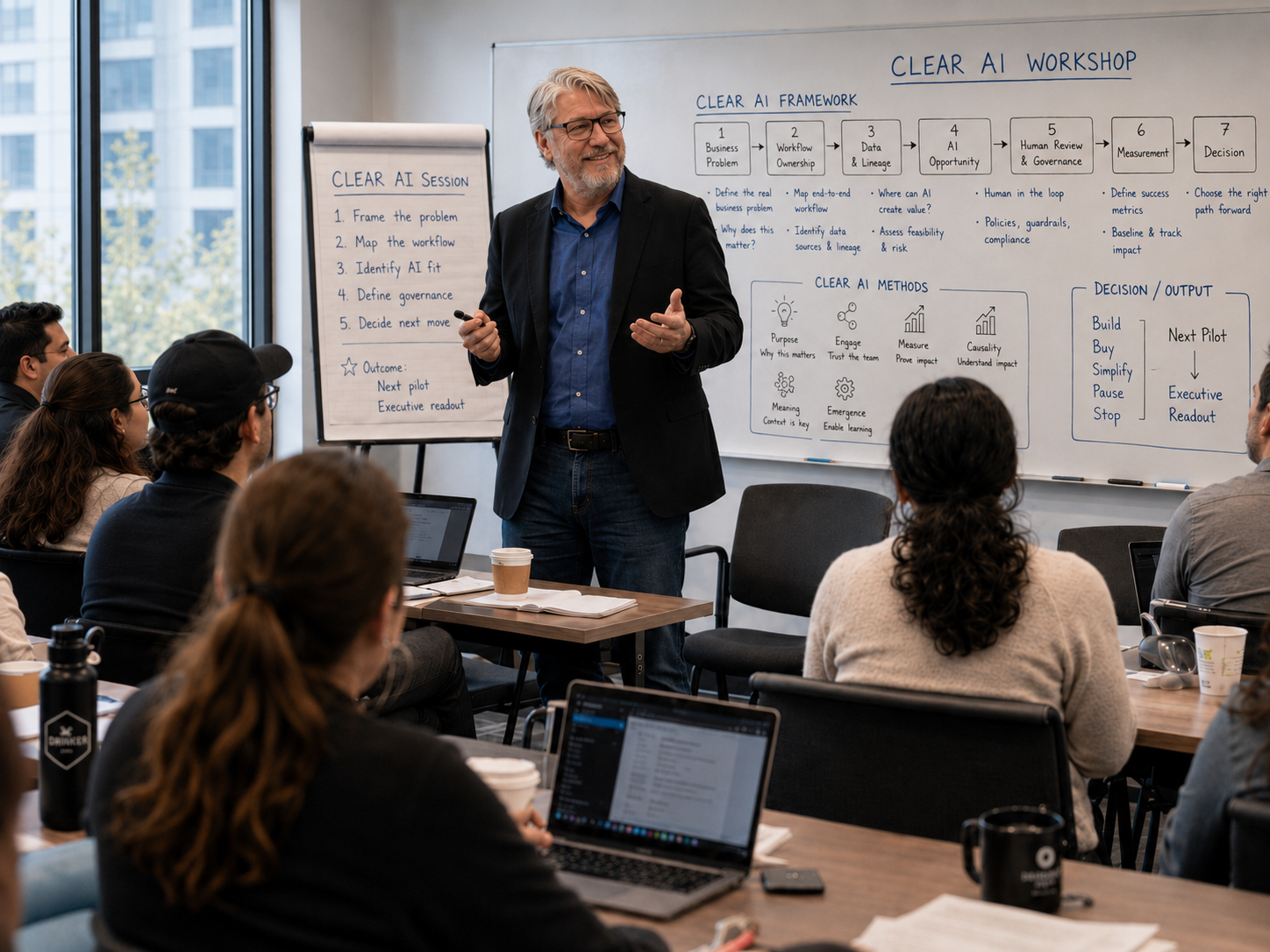
The CLEAR AI Approach

To turn messy AI pressure into a visible, functional system, I guide your implementation through a strict, five-step methodology:

1

Clarity: Name the unambiguous problem.

Before a single line of code is written, I prioritize understanding the exact purpose of your request. Are we solving an AI problem, a workflow bottleneck, or a product decision? We establish the precise context and audience first.

2

Limits: Map the constraints and the system.

AI needs boundaries to be reliable. I map the real work, data, interfaces, and risks, setting strict constraints so the output remains targeted, secure, and aligned with your operational realities.

3

Examples: Place the AI and design the connection.

This is where we decide where the AI assists and where the technology steps back. Using high-fidelity prototyping, I look at the whole picture—understanding exactly how agentic flows, backend development, and intuitive design all connect to shape the human experience. By mapping these intersections, I design the interaction so humans aren't just in the loop; they are the experience.

4

Adaptation: Orchestrate the practical path.

I treat AI integration as an active, iterative feedback loop. We determine what to build, simplify, pause, or govern, fine-tuning the system and handling errors so the architecture adapts to real-world friction.

5

Reflection: Consolidate your next moves.

I relentlessly analyze the system's outputs and explain its reasoning to catch edge cases before they hit production. Moving your team through a disciplined cycle to Concept, Ideate, and Consolidate, we turn abstract pressure into a deterministic roadmap.

Contextual Innovation Cycle diagram showing human and AI roles across concept, iteration, and consolidation
The work turns messy AI pressure into a visible system: people, decisions, constraints, and next moves.
The result: a decision you can defend and a functional path I can help you build.

Proof

Applied systems work, not AI commentary.

I don't just advise on these systems — I've built them. Governance engines, agentic workflow systems, biomedical data tools, and Clear Intelligence: adaptive orchestration for real constraints.

Governance dashboard with system controls

Governance & risk systems

Data exposure is the #1 reason businesses stall on AI, and the real danger is usually internal: tools changing workflows invisibly, surfacing data the wrong people can see. I build the controls, evidence, and review paths that make AI outputs explainable and safe to act on.

Agentic workflow workbench showing agent lineage and decision paths

Agentic workflow systems

Agents mapped around handoffs, human review gates, escalation paths, and what the business needs to decide next.

Biomedical and research intelligence dashboard

Biomedical & data intelligence

Complex biomedical systems shaped into decision-support workflows: drug behavior, disease mechanics, patient staging, and risk surfaced in a way people can act on.

Clear Intelligence adaptive orchestration visual with connected systems

Adaptive orchestration

Clear Intelligence keeps context, behavior, and interface state connected so AI support can adapt to the user and the workflow.

Clear Intelligence Live
Tuned for: workflow & AI-fit diagnosis

Ask where AI belongs in your workflow, what an agent should do, or what's breaking around the automation — answers come through the Clear Sight Method.

Clear Intelligence learns this site as it grows — the same way the systems I build learn yours.

AI Systems Field Notes

Short, practical essays from the systems lens.

How to design with agentic AI, place AI inside real workflows, and avoid treating automation as strategy.

Field Note

Designing With AI Agents: The Agent Is Not the Workflow

A practical field note on designing agentic AI systems around workflow, context, tools, memory, human review gates, failure surfaces, and accountability.

Read the field note

FAQ — Answers for AI Systems Consulting

Answers for AI systems consulting with Preston McCauley.

Who is Preston McCauley?

Preston McCauley is the founder of Clear Sight Designs, author of Generative AI for Everyone, a Top 75 AI Innovator nominee, and a 25+ year AI, product, UX, and systems architecture leader.

What does Clear Sight Designs do?

Clear Sight Designs helps Dallas and DFW businesses implement AI inside real workflows: where AI belongs, what stays human, what risks need controls, and what the next practical step should be.

How is this different from hiring an AI developer?

An AI developer can build features. I help decide whether the feature should exist, what workflow it belongs inside, what humans still review, what risks need controls, and how the team will actually use it.

Do you work with Dallas businesses?

Yes. Dallas-Fort Worth clients are the priority, especially founder-led companies, product teams, operations teams, healthcare-adjacent teams, biotech, risk, education, and complex service businesses.

Do you work remotely?

Yes. I prefer Dallas clients when the fit is strong, but I also work remotely when the problem is specific, high-value, and aligned with AI implementation, workflow mapping, or product architecture.

What does an AI implementation consultant do?

An AI implementation consultant helps a company turn AI pilots into working systems by mapping workflows, identifying where AI belongs, defining human review gates, planning governance, and helping teams adopt the system safely.

Why is implementing AI so hard?

Trying an AI tool is easy. Implementing AI inside a real business is harder because the workflow includes decisions, approvals, exceptions, relationships, data access, and trust. Those have to be mapped before automation works.

Why do AI pilots stall?

AI pilots stall when they start with the tool instead of the system. The workflow is unclear, the use case is too broad, the data is not ready, or nobody has decided what humans still own.

Why do agentic AI workflows fail?

Most agentic AI failures happen because the workflow around the model was not mapped: decision points, human review gates, risk boundaries, escalation paths, context, and business consequences.

How much AI implementation is successful?

Research keeps showing the same pattern: many companies try AI, but far fewer turn it into measurable operational value. The failure is usually not the model. It is weak integration, workflow mismatch, poor adoption, or unclear business value.

Do you build AI systems or just advise?

Both can fit. I have built governance engines, biomedical data tools, agentic workflow systems, automation systems, and adaptive orchestration. The work may be strategy, architecture, implementation planning, or product/system design depending on the problem.

Do you sell prompt packs?

No. I may package methods and workflow tools, but the core work is AI implementation judgment: where AI belongs, what should stay human, what risk surfaces exist, and what system needs to be built around the technology.

Who should work with Clear Sight Designs?

Founders drowning in manual work, Dallas business owners evaluating AI, product teams building AI tools, operations leaders with messy workflows, and technical teams who need outside judgment before they build or buy.

How do consulting engagements start?

They usually start with a specific AI, workflow, product, or technical decision. I help make the system visible, decide where AI belongs, and identify the next practical move.

What should I send before we talk?

Send the workflow, product, AI prototype, decision, or messy business process that feels unclear. A rough but specific problem is more useful than a polished brief.

AI Readiness

Talk through your AI decision.

You don't need a perfect brief. If you're the person everything routes through — the one doing the follow-ups, the scheduling, the triage, the explaining — that's exactly the situation this work is built for. Send me the workflow, product, or AI question that feels unclear, expensive, risky, or stuck.

"I know AI matters, but I am not sure where it belongs."
"My team is drowning in manual follow-up work."
"We built an AI prototype, but people are not using it."
"We want an agentic workflow, but need to map it first."
"I need outside judgment before investing in this AI product."
"I need to explain a complex AI product to buyers or investors."