
AI Made Research Abundant. Trust Became the Scarce Resource.
The research bottleneck is no longer producing information.
The new bottleneck is determining whether that information is: meaningful or merely plausible, supported or synthesized, complete or selectively framed, exploratory or decision-ready, and useful within the limits of the available evidence.
Traditional research expertise was never just the ability to find information. It was the ability to judge the relationship between evidence, interpretation, uncertainty, and action.
AI has made that judgment more important—not less.
A Good-Looking Answer Can Still Be the Wrong Kind of Evidence
Research-shaped output is not the same thing as research you should use.
Meet the Trust Layer Between Research and Action
CLEAR AI Research Signal guides you through a structured examination of AI-generated research, reports, summaries, recommendations, and conclusions.
It does not merely ask, “Is this true?” It helps you determine:
- What kind of signal is present
- How it was measured or supported
- Where bias and uncertainty enter
- What the evidence actually allows you to claim
- How much validation the decision requires
- What should happen next
CLEAR is the discipline before belief.
TRUST is the audit before action.
Two Systems. One Governed Research Path.
CLEAR AI™
Shape the investigation before accepting the answer.
CLEAR helps clarify: the real question, the purpose of the research, the evidence boundaries, the missing perspectives, and the context required to interpret the result.
TRUST™
Evaluate the insight before using it.
TRUST examines: signal type, measurement and evidence, bias and uncertainty, claim boundaries, sufficiency, and decision readiness.
Together, they transform a convincing research output into an insight that can be examined, challenged, and responsibly used.
From AI Output to Decision-Ready Insight
Step 1 — Bring the research
Paste or provide: an AI-generated report, a research summary, a proposed conclusion, a market analysis, a recommendation, or a collection of source material.
Step 2 — Establish the research intent
Define: the decision being supported, the stakes involved, the intended audience, and the level of certainty required.
Step 3 — Examine the signal
The system separates: evidence, interpretation, assumptions, patterns, contradictions, and unsupported claims.
Step 4 — Test trust and sufficiency
Evaluate the research for: source relevance, measurement quality, bias, uncertainty, missing evidence, causal overreach, and decision risk.
Step 5 — Generate the Insight Trust Profile
Receive a structured assessment showing what the insight means, where it is strong, where it is limited, and what should happen next.
Know What You Have Before You Decide What to Do With It
The Insight Trust Profile
Each analysis produces a structured profile that can include:
Signal Classification
What kind of research signal is present: exploratory, directional, comparative, predictive, causal, evaluative, or decision-supporting.
Evidence and Measurement
What supports the conclusion and whether the measurement matches the claim.
Confidence Signals
What strengthens the insight.
Distrust Signals
What weakens it or requires further examination.
Bias and Assumptions
What perspectives, framing choices, incentives, or hidden assumptions may affect the result.
Claim Boundary
What the evidence allows you to say—and what it does not.
Contradictions and Missing Evidence
What remains unresolved, absent, or in tension.
Decision Readiness
A clear next-state recommendation: Explore, Validate, Report, Decide, Act, or Do Not Use Yet.
Built for the Research Decisions Already Happening in Your Work
Evaluate an AI-generated market report
Determine whether the market signals support investment, positioning, or product decisions.
Review customer or user research
Separate recurring evidence from isolated comments, researcher interpretation, and premature conclusions.
Test a strategic recommendation
Examine whether the proposed action follows from the research or extends beyond it.
Assess competitive intelligence
Identify where conclusions are based on direct evidence, inference, outdated information, or incomplete coverage.
Validate executive briefing material
Ensure that confident summaries preserve uncertainty, limitations, and material contradictions.
Review academic or professional research
Examine source quality, measurement, bias, claim boundaries, and practical decision relevance.
This Is Not Another Research Generator
The goal is not to make AI sound more certain. The goal is to make your use of AI more discerning.
For Anyone Turning Research Into a Decision
- Business and strategy leaders
- Researchers and research teams
- Product and UX professionals
- Consultants and advisors
- Educators and students
- Analysts and knowledge workers
- Founders and operators
- AI-enabled teams
You do not need to be a professional researcher. You do need a repeatable way to examine AI-generated evidence before it becomes a presentation, recommendation, investment, roadmap, policy, or operational decision.
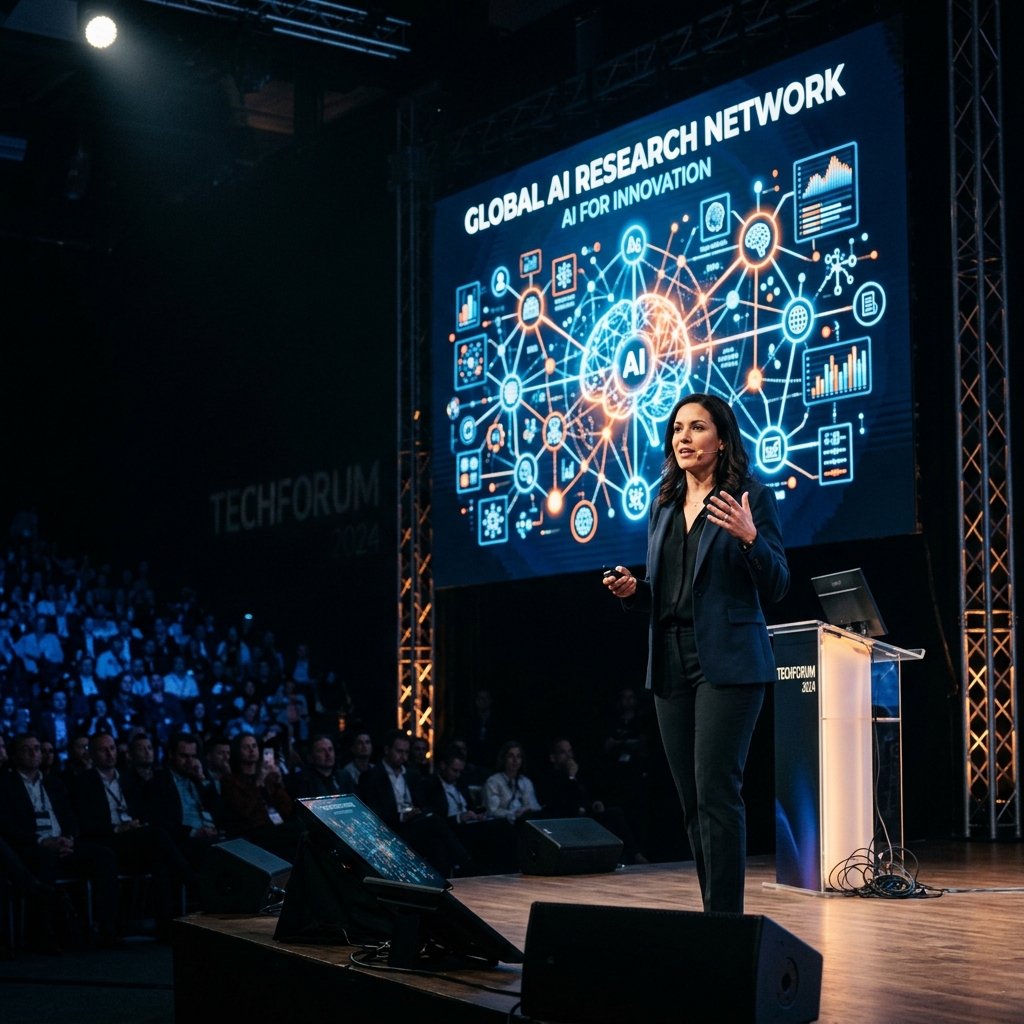
Built From “If Everyone Can Do Research, Who Is the Researcher?”
CLEAR AI Research Signal extends the central argument from Preston McCauley’s talk:
As AI makes research production broadly accessible, the role of the researcher shifts. The researcher is no longer defined only by who can locate information or generate an analysis. The researcher becomes the person capable of examining evidence, preserving uncertainty, challenging interpretation, and determining whether an insight is ready to be used.
The tool converts that responsibility into a guided, repeatable workflow.
Everything You Need
- CLEAR AI Research Signal guided workflow
- TRUST evaluation framework
- Research-intent setup
- Signal classification system
- Evidence and measurement review
- Bias and uncertainty analysis
- Claim-boundary evaluation
- Decision-readiness assessment
- Reusable Insight Trust Profile
- Worked research examples
- Quick-start guide
- Implementation instructions for ChatGPT, Claude, Gemini, or Copilot
Move From “This Sounds Right” to “We Know How This Should Be Used”
The system helps users:
- reduce false confidence
- identify unsupported conclusions
- preserve meaningful uncertainty
- challenge weak evidence
- expose missing perspectives
- improve research conversations
- document why an insight was accepted or rejected
- match the level of validation to the stakes of the decision
Trust does not mean certainty.
It means understanding the evidence well enough to use it responsibly.
Before You Use the Research, Understand the Signal
AI can help produce the report. CLEAR AI Research Signal helps you determine what the report is actually ready to support.
Pricing announced at launch
- One-time purchase
- Reusable across research projects
- Works with leading generative AI platforms
- No research or technical background required